
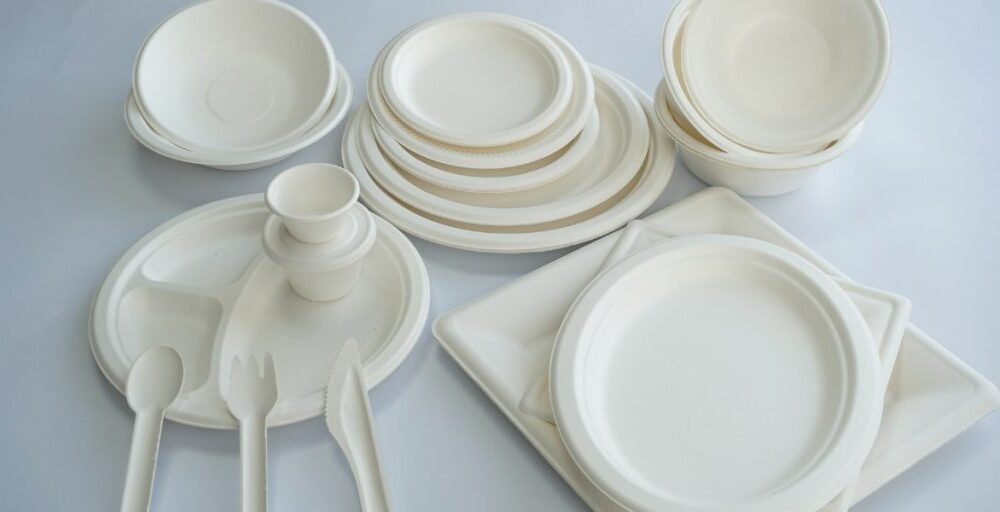
In the rapidly evolving landscape of sustainable packaging, bagasse tableware has emerged as a leading eco-friendly solution for the modern foodservice industry. Bagasse is the fibrous byproduct that remains after sugarcane stalks are crushed to extract their juice. Traditionally considered waste, this material is now being transformed into a valuable, renewable resource, offering a compelling alternative to conventional plastics and styrofoam. Its transformation from agricultural residue into high-performance tableware exemplifies a circular economy approach, repurposing what would otherwise be waste into a valuable product that helps reduce overall environmental impact and does not deplete finite natural resources. This “waste-to-value” narrative is a powerful appeal to businesses seeking both environmental responsibility and resource efficiency.
Bagasse tableware offers a multitude of advantages that make it an ideal choice for eco-conscious businesses:
● 100% Biodegradable & Compostable: Bagasse products are designed to decompose naturally within 60-90 days, leaving no harmful residues in the environment. This characteristic significantly reduces landfill waste and plastic pollution, safeguarding ecosystems and marine wildlife.
● Durability & Performance: Despite their natural origin, bagasse products are remarkably sturdy and robust. They are capable of withstanding both hot and cold temperatures without leaking or breaking, making them suitable for a wide range of culinary applications. This includes hot food delivery, meal preparation, and dine-in services, ensuring food integrity and presentation.
● Microwave & Freezer Safe: The ability of bagasse products to safely withstand extreme temperatures makes them exceptionally practical for today’s fast-paced food establishments, allowing for convenient reheating and storage.
● Food-Safe & Non-Toxic: Bagasse tableware is free from harmful chemicals such as PFAS, BPA, bleach, or petroleum-based plastics. No toxic substances or odours are released, even at high temperatures or in acidic or alkaline conditions, ensuring 100% food contact safety.
● Resource Efficiency: Unlike plastic, which is derived from fossil fuels, bagasse tableware is made from organically renewable materials. Its production requires fewer energy and water resources, contributing to lower carbon emissions and enhanced sustainability.
● Reduced Carbon Footprint: By utilising sugarcane waste that would otherwise be incinerated or sent to landfills, the production of bagasse products inherently requires less energy compared to traditional disposable products made from non-renewable resources.
The demand for bagasse tableware is experiencing significant growth globally. As noted in the previous section, the overall sugarcane-based packaging market is expanding at a CAGR of 9.7%, with bagasse materials holding a dominant share. This growth is particularly evident in specific regional markets. InIn
In Germany, the bagasse tableware market is estimated at USD 187.5 million in 2025 and is projected to reach USD 305.4 million by 2035, growing at a 5.0% CAGR. Within Germany, plates notably dominate the bagasse tableware market, especially in foodservice, due to their versatility for various food types and their ability to withstand heat for hot dishes. This specific preference for plates in the German market is a crucial consideration for localised content optimisation and product focus. German consumers are highly sensitive to environmental issues, which further fuels the demand for such eco-friendly products. In the UAE, bagasse tableware is identified as a key certified alternative to single-use plastics, aligning perfectly with the nation’s comprehensive plastic ban by 2026. Companies like Eco-Delicious highlight bagasse plates as a compelling solution for eco-conscious businesses in the USA and Canada, emphasising their durability, heat resistance, and leak-proof performance. The foodservice sector, particularly quick-service restaurants (QSRs) and fast-casual dining chains, is at the forefront of adopting sugarcane-based packaging. This adoption is driven by increasing regulatory pressures and evolving consumer preferences for sustainable options. Bagasse’s versatility extends to a wide range of products and applications. The material is used to manufacture various items, including round, compartment, and oval plates; bowls; clamshells; trays; cups; and even compostable bags. These products are ideally suited for diverse settings such as restaurants, cafes, hotels, schools, catering services, food trucks, and large-scale events. The consistent emphasis on bagasse’s performance attributes—its sturdiness, durability, and ability to retain heat without getting soggy —is a critical factor for B2B buyers. This strong functional performance ensures that businesses can adopt sustainable options without compromising service quality, directly addressing a common concern regarding eco-friendly alternatives. Businesses evaluating suppliers can also explore our advanced B2B sourcing guide for sustainable disposables for a detailed procurement framework