
Selecting the right kind of disposable plate is not as simple as it used to be. Restaurants, caterers, cafes and food delivery services want tableware that does not add waste. Consumers want convenience, reliability, and sustainable packaging. Businesses are comparing bagasse and paper plates to see which is a better choice.
While they are similar in some ways, there are also notable differences between the two to help buyers make the best choice.
Understanding the Difference Between Bagasse and Paper Plates
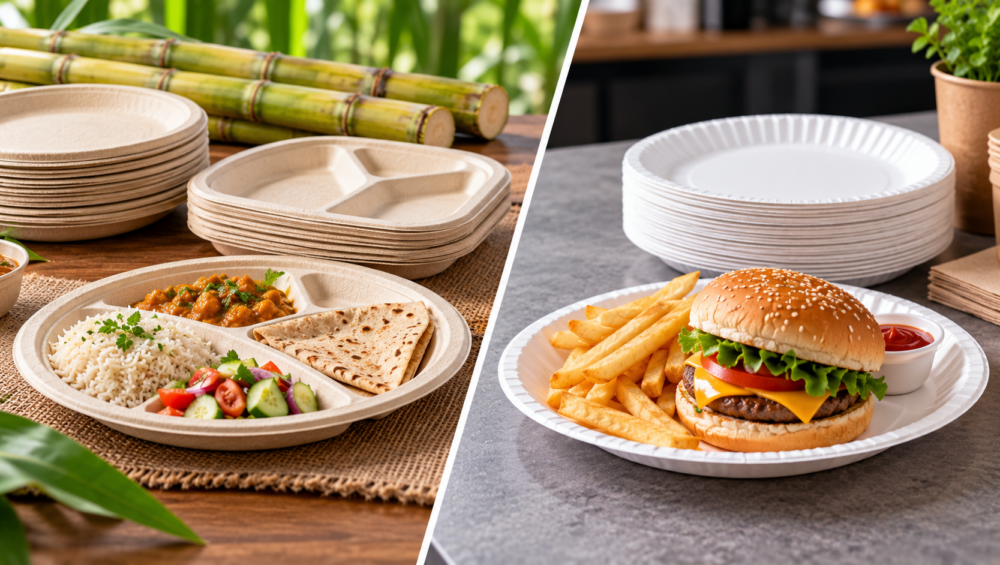
Bagasse plates are made from the fibre of sugarcane. After the liquid is squeezed out, the fibrous part is formed into paper like containers and plates.
Paper plates are created from paper pulp, and are often treated to make them more resistant to water and grease.
Performance Matters in Everyday Foodservice
Busy foodservice operations need plates that can handle a variety of foods without losing their shape. Bagasse plates are generally stronger when serving hot meals, oily dishes, or foods with sauces. Their rigid construction helps reduce bending during use.
If you’ve ever wondered why some disposable plates remain firm while others become soft, let us explain. The material itself makes the difference. Bagasse naturally provides better strength for demanding food applications, making it suitable for restaurants, catering services, and takeaway businesses.
Heat, Moisture, and Food Handling
Hot curries, gravies, rice dishes, rice noodles, snacks, and other favourites all require more durable tableware. Bagasse plates are able to resist heat and moisture, and maintain their shape.
Paper plates are thinner and more prone to damage. They may hold up well for certain kinds of foods and serving styles. Heavier meals require a stronger plate to be able to withstand moisture, heat, and the weight of the food itself. It is not just the kind of food that matters, but also the way that it is served.
Choosing the best plate for the type of food that a business serves is vital for customers and the bottom line.
Choosing the Right Option for Your Business
Cafes, bakeries, and sandwich shops may find that paper plates suits their needs more. Restaurants, cloud kitchens, catering services, and event organisers will likely benefit from bagasse plates. There are other factors at play as well, including presentation, storage space, transport, and what consumers expect from the food or meal.
Businesses that serve complete meals, including main courses and sides, often require plates that are more resistant to heat, moisture, and weight. Deciding which plates are a better choice depends on the menu, and the way that food is presented and delivered.
Make a Smarter Foodservice Choice
The ideal plate for a food business will have the features required to deliver the best kind of customer experience. Comparing bagasse and paper plates helps buyers to make the best choice. Both kinds of tableware affect the way that a business operates on a day to day basis. They impact costs as well as sustainability and environmental concerns.
Conclusion
For businesses that serve heavier foods or meals that include more moisture or heat, bagasse plates will likely be a superior choice.
Ecodelicious Pulp has a wide range of bagasse tableware that is perfect for foodservice businesses. Contact for more information.

Harshil Lakhani is the Founder of Ecodelicious Pulp LLP, a sustainability-focused company dedicated to creating high-quality, biodegradable and compostable tableware from sugarcane bagasse. With a vision to reduce dependence on single-use plastics, he is helping drive the adoption of practical, eco-friendly alternatives for businesses and consumers worldwide.