
Sustainable tableware now has to meet the same practical expectations as conventional food packaging. A plate may look natural and attractive, but can it handle curry, biryani or a hot meal? Will it remain consistent across a large catering order? Can a supplier meet regular bulk requirements?
These questions matter to restaurants, cloud kitchens, caterers and foodservice businesses choosing between bagasse and areca leaf plates.
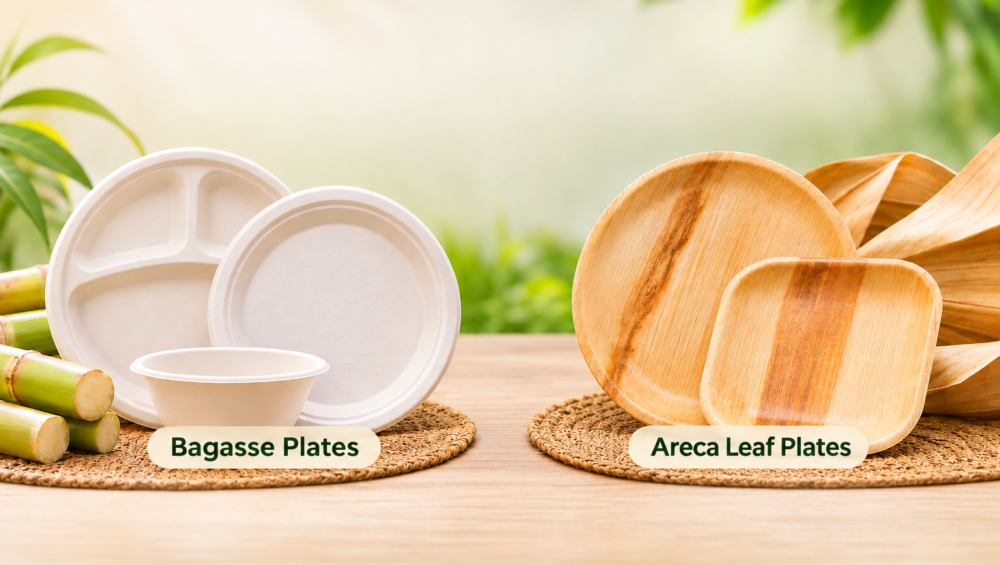
Both materials offer plant-based alternatives to conventional disposable tableware, but they have different strengths. Bagasse is widely used for standardised foodservice products, while areca leaf plates are known for their natural grain and distinctive appearance.
Understanding these differences can help businesses choose the right option for their food, presentation and purchasing needs.
Bagasse vs Areca Leaf Plates: Key Differences
| Feature | Bagasse Plates | Areca Leaf Plates |
|---|---|---|
| Raw Material | Sugarcane fibre residue | Fallen areca palm leaf sheaths |
| Appearance | Smooth, uniform finish | Natural grain and varied texture |
| Hot Food | Suitable, depending on product specifications | Suitable, depending on product specifications |
| Wet and Oily Food | Depends on barrier performance | Depends on product design and testing |
| Consistency | Standardised shapes and sizes | Natural variations in appearance |
| Branding | Custom packaging and selected product customisation | Limited surface branding options |
| Bulk Supply | Suitable for standardised, repeat production | Depends on raw material availability and supplier capacity |
| Common Applications | Restaurants, takeaway, catering and institutional dining | Weddings, traditional meals and events |
Both options have advantages. The right choice depends on what a business serves, how the plates are used and how frequently new stock is required.
What Are Bagasse and Areca Leaf Plates Made From?
Bagasse plates are manufactured using sugarcane fibres left after juice extraction. The fibres are processed into pulp and moulded into different shapes, including plates, bowls, trays and food containers.
This manufacturing process allows producers to create tableware with consistent dimensions and a relatively smooth finish.
Businesses can choose from different sizes and designs, including bagasse plates with separate compartments for meals containing multiple dishes.
Areca leaf plates are made from fallen sheaths of areca palm leaves. The collected material is cleaned, dried and heat-pressed into the required shapes.
Unlike moulded bagasse, areca plates retain their natural grain and texture. Each plate can have a slightly different appearance, giving it a distinctive look.
This makes areca leaf plates appealing for weddings, traditional dining and events where presentation is particularly important.
Bagasse vs Areca Leaf Plates for Hot, Wet and Oily Food
Food suitability is one of the most important considerations when purchasing disposable plates.
Indian foodservice businesses frequently serve curries, gravies, rice dishes, snacks and desserts. Plates need to support these foods without becoming unstable during normal serving conditions.
Bagasse plates are available in designs intended for hot and cold meals, including wet and oily foods. Their suitability depends on factors such as thickness, product design and any grease- or moisture-resistant treatment.
Areca leaf plates can also hold hot and moist foods, depending on their construction. However, their performance with oily dishes, sauces and liquid-heavy meals should be assessed using the intended product.
For restaurants and caterers, testing samples with actual menu items is the best way to assess performance.
Businesses serving dishes with generous amounts of gravy may also benefit from using compartment plates or appropriately sized bagasse bowls instead of standard flat plates.
Design, Durability and Customisation
Presentation matters in commercial foodservice, but consistency is equally important.
Bagasse plates are manufactured using moulds, which helps achieve standardised shapes and sizes across production batches. This can make stacking, packing, portioning and storage more predictable for businesses ordering large quantities.
Their uniform appearance also suits modern restaurants, takeaway services and foodservice brands seeking consistent presentation.
For businesses interested in custom branding, bagasse tableware may offer options such as branded cartons, customised packaging or selected product modifications, depending on the manufacturer’s capabilities.
Areca leaf plates offer a different visual appeal. Their natural texture complements traditional meals, outdoor dining and cultural events.
However, the uneven surface and natural grain can limit certain branding or printing methods.
Businesses should therefore consider whether they prioritise consistent presentation and packaging or the distinctive appearance of natural leaves.
Bulk Availability and Supply Consistency
A suitable product is only useful when a business can source it in the required quantity.
Bagasse is produced from sugarcane processing residue and can be manufactured into standardised tableware in large quantities. This makes it a practical material for commercial production and repeat orders.
Areca leaf plates depend on the collection and processing of naturally fallen leaf sheaths. Their supply may be influenced by raw material availability, seasonal collection and manufacturing capacity.
Neither material guarantees uninterrupted supply.
Restaurants, distributors and catering businesses should confirm production capacity, minimum order quantities, lead times and stock availability before selecting a supplier.
Businesses purchasing bulk bagasse tableware should also consider carton quantities, shipping requirements and the ability to source multiple product sizes from one manufacturer.
Cost and Bulk Purchasing Considerations
Price is important when comparing bagasse and areca leaf plates, especially for businesses purchasing thousands of units.
However, the lowest price per plate does not always represent the best overall purchasing value.
Costs can vary depending on product size, thickness, manufacturing process, order quantity, packaging and delivery location.
Businesses should compare:
- Price per plate at the required order quantity
- Carton quantities and packaging dimensions
- Freight and storage costs
- Product strength and suitability for the menu
- Availability for regular repeat orders
- Custom packaging requirements
For importers and wholesalers, carton volume and container loading efficiency can also affect the final landed cost.
Requesting comparable quotations and product samples from suppliers will provide a more reliable basis for making a purchasing decision.
Sustainability and Food-Contact Considerations
Bagasse and areca leaf plates both use plant-based materials, but this does not mean every finished product has identical environmental or food-contact characteristics.
Compostability can depend on the manufacturing process, coatings, additives and the conditions in which the product is disposed of.
Businesses should request relevant compostability and food-contact documentation for the specific products they intend to purchase.
Market regulations also matter. For example, the US Food and Drug Administration stated in May 2025 that dinnerware manufactured from Areca catechu leaf sheaths may not lawfully be offered for sale in the United States because of concerns about naturally occurring alkaloids migrating into food.
For international buyers, checking current destination-market requirements is an essential part of supplier selection.
Which Is Better for Restaurants, Caterers and Food Businesses?
For restaurants, cloud kitchens and takeaway businesses, bagasse is often a practical choice because it is available in standardised sizes and different foodservice formats.
Caterers serving large groups may also benefit from compartment plates and meal trays that make portioning and serving easier.
Areca leaf plates are worth considering for traditional events, weddings and occasions where natural texture is an important part of the dining experience, provided the products meet applicable food-contact requirements.
For distributors and wholesalers, the decision may depend more heavily on repeat availability, product range, packaging specifications and supplier capacity.
Neither option is automatically better for every application. Businesses should prioritise food suitability, compliance, operational needs and reliable sourcing.
Choose Bagasse Tableware for Your Business with Ecodelicious Pulp LLP
For businesses looking for standardised, plant-based foodservice products, Ecodelicious Pulp LLP manufactures and supplies a range of sugarcane bagasse tableware.
Our product range includes plates, bowls, trays, clamshell containers, dona bowls and sipper lids for restaurants, caterers, distributors, wholesalers and foodservice businesses.
We support bulk orders and international sourcing requirements, with options for custom packaging and branding based on individual business needs.
Explore our bagasse plate collection or contact our team to discuss product specifications, order quantities and wholesale pricing.
Frequently Asked Questions
Bagasse plates are often suitable for businesses requiring standardised sizes, consistent presentation and repeat bulk orders. Areca leaf plates offer a distinctive natural appearance that can suit traditional meals and special events. The best choice depends on the intended application and applicable food-contact requirements.
Some areca leaf plates are designed to handle hot, moist and oily dishes. However, performance depends on thickness, product design and manufacturing quality. Businesses should check supplier specifications, test samples with their menu items and verify compliance with local food-contact regulations.
Both materials can be used to manufacture compostable tableware. However, actual compostability depends on the finished product, any added coatings or treatments, and the composting conditions. Businesses should request appropriate supporting documentation before making specific environmental claims.
Bagasse plates can be a practical option for large catering operations because they are available in standardised sizes and compartment designs. Areca leaf plates may also be supplied in bulk, but businesses should confirm stock availability, order quantities and lead times.
Yes. Ecodelicious Pulp LLP supplies bagasse plates and other moulded-fibre tableware for commercial buyers. Businesses can enquire about available product sizes, carton specifications, bulk quantities and export requirements through the contact page.

Harshil Lakhani is the Founder of Ecodelicious Pulp LLP, a sustainability-focused company dedicated to creating high-quality, biodegradable and compostable tableware from sugarcane bagasse. With a vision to reduce dependence on single-use plastics, he is helping drive the adoption of practical, eco-friendly alternatives for businesses and consumers worldwide.