
Running a corporate canteen comes with a hundred small decisions every single day, and tableware is one that often gets pushed to the bottom of the list. That is completely understandable, since plates and bowls seem like a minor detail compared to menus and budgets. But here is the truth, those small daily choices add up fast when you are feeding hundreds or thousands of people.
Once you see the bigger picture, switching to a smarter tableware option starts to feel less like extra work and more like common sense.
The Real Difference Between Plastic and Plant-Based Tableware
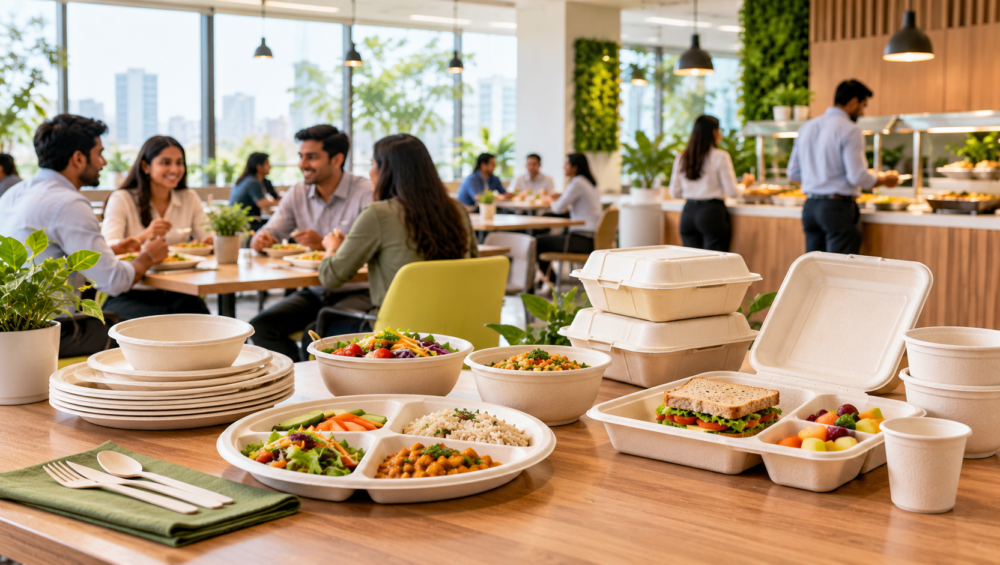
Traditional plastic tableware takes years to disappear in the environment, while polystyrene can barely be recycled, which makes waste management difficult. Sugarcane bagasse tableware is a true alternative in terms of practicality. Bagasse is just another name for sugarcane fibre left after juice extraction, and it is used by producers to make plates, bowls, trays, and clamshell containers, which are as durable as plastic.
Durability Is Even More Important Than You Think
Staff members expect lunch plates to cope with curries, rice, soups and other dishes and keep their shape and structure without any leaks, and good-quality bagasse products are made to withstand this test.
Bagasse products work for daily catering services in the office, for takeaway meals, for trainings, and for any large events held at the office, in which case washing reusable plates is not always possible.
Food Safety Comes First and Always Must
Before placing bulk order, procurement team should check whether tableware is suitable for direct food contact and whether it is oil and water-resistant. Microwave and refrigerator compatibility is an additional feature, which may be important for some types of meals, and asking for specifications of products in advance is preferable.
Discovering Which Locations Require Disposable Tableware the Most
An intelligent canteen programme includes studying the whole process of meal service: breakfast counters, beverage stations, meeting rooms, and other places where disposable tableware is required. After discovering places requiring specific type of disposable tableware, ordering correct amounts of plates, bowls, and lids becomes easy. For packed lunches, clamshell containers will do, while varied menu can be served on compartment plates without additional packaging.
Organising Composting and Disposal of Waste
Disposal is a necessary part of the process of using compostable tableware, and the latter requires correct conditions of composting. Therefore, introducing waste segregation together with purchasing new tableware will have beneficial effect on the environment. All that is needed is posting signs next to dining area and giving brief training to cleaning staff.
Making the Switch Easier for Your Company
Sustainable tableware is not just an eco-friendly gesture. It is a practical upgrade that fits right into everyday corporate dining. From reviewing current consumption to planning responsible disposal, every small step adds up.
Ecodelicious Pulp offers a full range of biodegradable, food-safe bagasse products designed for exactly this kind of large-scale business need. Reach out to Ecodelicious Pulp today and get a tailored supply proposal that fits your canteen perfectly.

Harshil Lakhani is the Founder of Ecodelicious Pulp LLP, a sustainability-focused company dedicated to creating high-quality, biodegradable and compostable tableware from sugarcane bagasse. With a vision to reduce dependence on single-use plastics, he is helping drive the adoption of practical, eco-friendly alternatives for businesses and consumers worldwide.