
Many restaurant owners and dhaba operators assume that going green means spending more money. That’s one of the biggest myths in the food business.
The truth? Switching to eco-friendly tableware can be surprisingly affordable when done right. In some cases, businesses even reduce costs by choosing smarter alternatives and minimising waste.
If you’ve been thinking about replacing plastic plates, cups, or containers but are worried about your budget, here’s some good news: you don’t need a complete overhaul overnight.
Start Small Instead of Changing Everything
One mistake many businesses make is trying to replace every disposable item at once. There’s no need to start with the products you use most often. Maybe it’s takeaway containers. Maybe it’s plates for dine-in customers. Focus on high-volume items first and gradually expand from there.
This approach spreads out costs and gives your staff time to adjust.
Look Beyond the Purchase Price
A lot of people compare only the upfront cost. But that’s not the full picture.
Cheap plastic products often crack, bend, or fail when serving hot food. Customers notice these things. Sometimes food spills, which creates waste and frustration.
Quality biodegradable tableware made from sugarcane bagasse is strong enough for curries, snacks, rice dishes, and hot beverages. Because it’s sturdy, you often need fewer replacements and experience fewer product failures.
Buy in Bulk Whenever Possible
Whether you’re running a roadside dhaba or a busy restaurant chain, bulk purchasing can significantly lower costs.
Suppliers typically offer better rates for larger quantities, making eco-friendly products far more affordable than many business owners expect.
If storage space allows, planning purchases can help reduce per-unit costs throughout the year.
Match the Product to the Food
Not every item requires premium packaging.
For example:
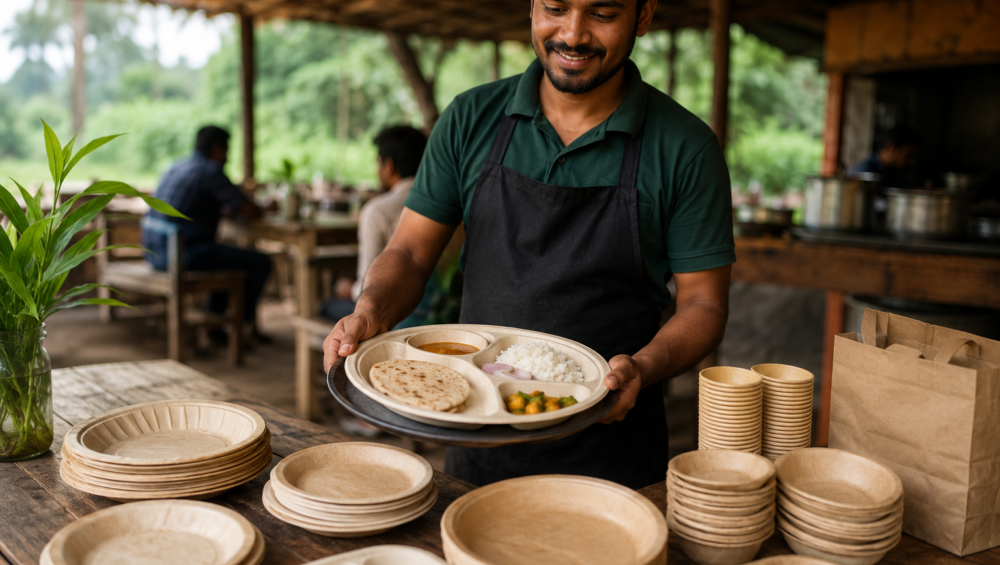
- Use compartment plates for thalis.
- Choose simple bowls for snacks and desserts.
- Use takeaway containers only where necessary.
- Select the right size cup instead of overpacking beverages.
Small adjustments like these can lower expenses without affecting customer experience.
Customers Notice Sustainable Choices
Today’s customers are paying more attention to packaging and dining practices.
When they see compostable plates and containers instead of plastic, it sends a positive message. Many customers appreciate businesses that make environmentally responsible choices, and that goodwill can help build loyalty over time.
The switch isn’t just about sustainability. It’s also about creating a better brand image.
Reduce Waste at the Source
An often-overlooked benefit of eco-friendly tableware is waste management.
Traditional plastic waste creates disposal challenges and contributes to pollution. Compostable products can simplify waste handling, especially when combined with proper organic waste collection systems.
Less waste often means lower cleanup efforts and a cleaner environment around your business.
Going Green Doesn’t Have to Cost More
Making the move to eco-friendly tableware doesn’t require a massive budget or complicated changes. By switching gradually, purchasing strategically, and choosing products that fit your operations, restaurants and dhabas can become more sustainable without increasing overall costs.
At Eco Delicious Pulp, sustainability and practicality go hand in hand. Using renewable sugarcane bagasse, Eco Delicious creates durable, biodegradable, and compostable products designed for everyday food service needs. Their tableware is strong, non-toxic, microwave-safe, refrigerator-safe, and built to handle real-world restaurant and dhaba operations while supporting a cleaner, zero-waste future.

Harshil Lakhani is the Founder of Eco Delicious Pulp LLP, a sustainability-focused company dedicated to creating high-quality, biodegradable and compostable tableware from sugarcane bagasse. With a vision to reduce dependence on single-use plastics, he is helping drive the adoption of practical, eco-friendly alternatives for businesses and consumers worldwide.